

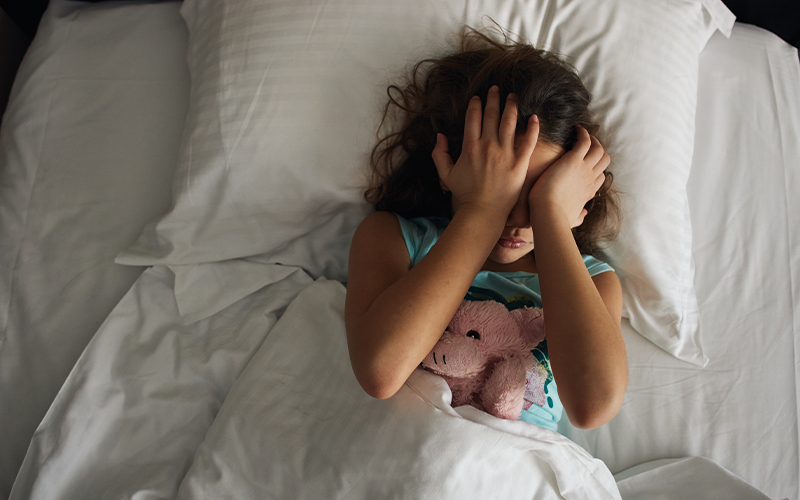
Young children who have consistently shorter sleep may be at greater risk of developing depression as teenagers.
A study of 8771 young people found that those who experienced persistently less rest as children were twice as likely to suffer poor mental health later on.
The research collated data from the study, which tracked children’s sleep up to the age of seven, with the results of a mental health survey taken from ages 12 to 22.
Although only 2% had ‘persistent shorter nighttime sleep’, 4.5% of these ultimately displayed higher depressive symptoms – double the ratio of those who’d had consistently good sleep.
Dr Isabel Morales-Muñoz said: ‘Efforts to address persistent poor sleep during childhood will have a host of benefits including addressing any potential mental health risks.’
Study European Child & Adolescent Psychiatry
Image | ISTOCK