
Abuse in teenage relationships has become disturbingly common. How has it got to this stage and what needs to happen to help young people now? Journalist Anna Scott investigates.
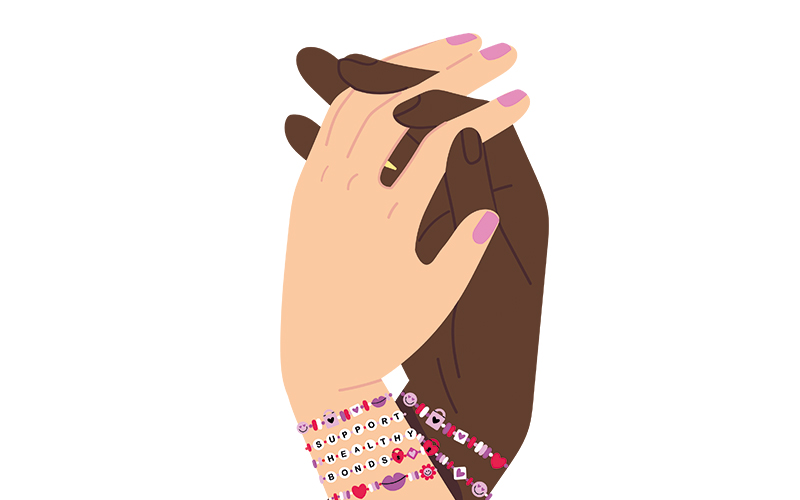
In England and Wales, almost two in five teenagers in intimate relationships experience abuse (Youth Endowment Fund, (YEF) 2025).
Just more than a quarter (28%) of 11,000 13- to 17-year-olds surveyed said they had been in a relationship in the past 12 months, and 39% of them said they had experienced some form of emotional or physical abuse (YEF, 2025). This is equivalent to more than one in 10 teenagers across England and Wales (YEF, 2025).
It’s a similarly upsetting picture around the UK. Charity Refuge reveals a disturbing rise in domestic abuse among young women and girls aged 16 to 25, particularly involving psychological abuse, coercive control and physical violence (Refuge, 2025). Young people made up 16% (2,857 out of 17,607) of new referrals to the charity’s services in 2024 and 2025 (Refuge, 2025).
The latest data for Scotland indicates that young people experience abuse at least as much as older victims, with 16- to 25-year olds more likely to have experienced physical violence at intake to a service (71% v 61%) and to be assessed as high risk (55% v 47%)(SafeLives, 2021). In Northern Ireland, 40% of 16-year-olds surveyed had experienced ‘at least one form of intimate partner violence’, with emotional abuse the most common (The Executive Office, 2022).
In a bid to truly tackle violence against women and girls (VAWG), the latest UK Government VAWG strategy for England is now focusing on healthy relationships, consent, and addressing harmful attitudes that lead to relationship abuse (Home Office, 2025a). The government has also promised to ‘deploy the full power of the state in the largest crackdown on violence against women and girls in British history’ (Home Office, 2025b). While this strategy applies to areas under UK Government responsibility, it has been informed by best practice from the three devolved governments’ VAWG strategies (see UK VAWG strategies).
HOW HAS IT GOT TO THIS?
Hypermasculinity has been idealised as a cultural norm across generations, says Dr Nicola Connolly, consultant clinical psychologist and chartered member of the British Psychological Society.
‘More significant harm has been noted during the Covid years, with easier access to and a greater dependence on digital connectivity, and the rise of manosphere forums becoming more mainstream,’ she explains. ‘These forums promote misogynistic views around rigid gender roles, the power and dominance of men, and the subjugation of women.
Relationship conflict or disagreements are viewed as power struggles, where men must show that they are in charge and emotional vulnerability is not exposed at any cost.’
Young people are concerned. ‘Exposure to unhealthy relationships, including through social media influencers like Andrew Tate or online misogyny, can normalise “toxic” behaviours, or result in young people misreading these as signs of “caring”,’ says Jess Southgate, the Youth Endowment Fund’s (YEF’s) VAWG lead. YEF knows this from members of its Youth Advisory Board, aged 16 to 25 from England and Wales, who have experience of or a passion for preventing youth violence.
If young people internalise ideas that frame power, control or dominance in relationships as acceptable, or even desirable, they may use these behaviours in their own relationships, sometimes justifying possessiveness, coercion or aggression, highlights Jess. ‘In turn, young people may not spot these “red flags”, minimising or normalising unhealthy behaviours, or not seeking help when they
experience abuse.’
It’s because humans are pre-programmed to seek connections with one another that they internalise these norms, explains Dr Connolly, ‘as a set of shared values in these groups, and from a need to belong to a social group’. She adds: ‘While at the extreme end of normative values, physical violence may be seen as the solution to avoid emasculation. The more subtle and insidious norms. around power and control can be seen in psychological abuse and coercive control throughout the life span, not just in the adolescent years.’
‘EXPOSURE TO UNHEALTHY RELATIONSHIPS, INCLUDING ONLINE, CAN NORMALISE “TOXIC” BEHAVIOURS, OR RESULT IN YOUNG PEOPLE MISREADING THESE AS SIGNS OF “CARING”’
WHY ADOLESCENCE MATTERS
‘Young people’s views are shaped by a range of influences, and adolescence is a key time when identities are formed,’ Jess says, pointing out that YEF’s research reveals a link between exposure to violence – at home, among peers and online – and relationship abuse.
‘Children who had witnessed or experienced physical abuse at home, for example, were three times more likely to have perpetrated emotional or physical relationship abuse. They were also significantly more likely to view coercive sexual behaviour as acceptable,’ Jess adds.
Viewing pornography online as a child (with the current offerings often violent) can also lead to harmful expectations in relationships for young people. Worryingly, more young people than ever are seeing it at an earlier age (Children’s Commissioner, 2025), as reported in the last issue of Community Practitioner.
Adolescence is a time of rapid physical and psychological change, including greater emotional independence from parents. ‘Children and young people are still figuring out who they are and where they fit in the world,’ says Rachel Seabrook, policy and public affairs manager for The Children’s Society.
Dr Connolly adds: ‘Peer groups take on a greater influence than before and the need to belong to a group will result in the young person gravitating towards peers with like-minded interests, tastes, attitudes or activities. The need for belonging and validation is strong and, therefore, young people are more vulnerable to joining groups that provide them with that security, even if the group norm is at odds with their own personal values.’
Healthy relationships have a powerful effect on lifelong mental and physical health. Positive relationships with others are associated with fewer functional limitations and living longer (Friedman et al, 2024).
Despite all this, clear, age-appropriate guidance on what a healthy relationship looks like may be absent, and teens are fearful and embarrassed to ask for help. ‘Many young people tell us they want help to understand what is and is not okay, but don’t know where to find support,’ says Sally Steadman, head of innovation and safe young lives lead at the charity SafeLives.
‘Our research [Safe Lives, 2017] found that people aged 13 to 17 experience the highest rates of domestic abuse of any age group. However, they are only legally recognised as victims of abuse in their own relationships from 16, causing them to fall between the gaps when in need of support from statutory services,’ Sally adds.
UK VAWG STRATEGIES
The UK Government VAWG strategy, applying to areas under UK Government responsibility, means that commitments on health, social care, housing, transport, and education apply to England only, as these are devolved matters. Commitments on crime, policing and justice apply to England and Wales, while those on reserved areas, such as online safety and immigration, apply UK-wide (Home Office, 2025a). It states: ‘VAWG is a national and international emergency, and we will continue working with the Welsh government, Scottish government, and Northern Ireland Executive to ensure a coordinated, UK-wide response.’
The Northern Ireland Executive launched a strategy framework in 2024 to end VAWG, with a £3m investment in voluntary and community sector projects (The Executive Office, 2025). It has six outcomes, including changing attitudes, behaviours and culture,
healthy and respectful relationships, and quality frontline service (The Executive Office, 2025).
Scotland’s Equally Safe Strategy to address violence against women and girls was ‘refreshed’ three years ago (Scottish government,
2023). It is delivered with £19m of annual funding, and takes a whole-society approach, focusing on early and effective intervention, such as prevention education, alongside support for survivors (Scottish government, 2023).
The Welsh government set out its four-year strategy – Violence Against Women, Domestic Abuse and Sexual Violence (VAWDASV)
– in 2022, which includes consideration of the needs of children and young people (Welsh government, 2022). This has included supporting the implementation of the Relationships and Sexuality Education curriculum’s promotion of healthy relationships, as well as work to address peer-on-peer abuse (Welsh Government, 2022).
THE GOVERNMENT RESPONSE
Clearly, strong action is needed now, so what’s being done about it? The government strategy to tackle VAWG in England includes
a review of more than 2000 academic papers, to identify relevant evidence of what works to reduce VAWG and support victims and survivors (Home Office, 2025a).
With a goal of halving VAWG by the mid-2030s, it includes £20m of funding to train teachers in how to talk to pupils about issues
such as consent, the dangers of sharing intimate images, identifying positive role models, and challenging unhealthy myths about women and relationships (Home Office, 2025b).
All secondary schools in England will be required to have a strong offer to educate students about healthy and respectful relationships, and will send high-risk individuals to get extra care and support (Home Office, 2025a). A new helpline will also be launched to help young people concerned about their behaviours to get the help they need (Home Office, 2025a).
‘Schools are already delivering healthy relationship education, but teachers need more support if the issues are to be tackled
effectively beyond the classroom – youth clubs, sports teams, and community groups,’ says Rachel.
‘We need stronger education on healthy relationships to counter these influences and promote positive, respectful behaviours.’
THE HARD TRUTH
The Youth Endowment Fund (YEF, 2025) surveyed nearly 11,000 children aged 13 to 17 in England and Wales to hear directly about
their experiences of violence.
37% of girls and 35% of boys said they had experienced emotional abuse
17% of girls and 13% of boys said they had experienced physical or sexual abuse
OF THE YOUNG PEOPLE IN RELATIONSHIPS WHO HAVE BEEN THE VICTIMS OF ABUSE:
19% experienced their partner going through their phone
11% had partners who criticised their body and appearance
10% were forced or pressured into sex
7.2% were physically hurt by their partners
5.1% had partners who shared explicit images of them online
PERPETRATORS:
28% of both girls and boys said they had emotionally abused their partner
6.5% of girls and 10% of boys said they had physically or sexually abused their partner
HOW TO TEACH YOUNG PEOPLE
Schools play an important role in having open and honest conversations with young people that encourage them to reflect on their feelings, values, and boundaries through age-appropriate lessons, which include ‘communicating openly, consent, respecting themselves and others, and seeking support when something doesn’t feel right’, says Stevie Goulding, senior manager of Parent and Carers Services at YoungMinds.
‘Parents and other supportive adults also play a key role by modelling positive relationship behaviours and creating safe, non-judgemental spaces where young people feel able to talk,’ she adds. ‘Through these conversations, adults can help them identify behaviours that are unacceptable or inappropriate.’
The many portrayals of relationships in the media can also be useful starting points for discussion. They can allow adults to explore young people’s views on what they see, reinforce behaviours and call out what isn’t appropriate, in any type of relationship – both intimate and those with family and friends, Stevie explains.
‘It is important to give young people permission to take breaks from, or step back out of, relationships that are not benefiting or supporting them,’ she adds. ‘They need to know they are not obligated to stay in friendships or relationships when something
doesn’t feel right, and that prioritising their wellbeing and safety is valid and important.’
Establishing trust is crucial, with professionals such as school nurses (SNs) actively listening and ‘putting themselves in the teenager’s shoes’, then checking out their understanding of what the young person has said, says Dr Connolly. ‘It is only when the young person feels “seen and heard” and “that you get them” that they are in a better position for being more open to receiving new information from the adult.’
Education that uses video-based scenarios – or tools such as “forum theatre”, where young people participate in changing the outcome of scenes – can be an impactful way to engage young people in this complex topic. ‘Sharing case studies and lived experience examples and videos from the perspective of young people can be powerful, rather than talking about it as an
abstract concept,’ says Rhian Ogden, child nursing lecturer at the University of Leeds and CPHVA Executive member.
SNs can also help advise parents by ‘encouraging an open and transparent approach to discussing things with their young people, and spotting the signs that something may not be right (changes in how the relationship is, how they behave or look), so they can recognise the need to discuss this with them’, adds Rhian.
‘IT IS IMPORTANT TO GIVE YOUNG PEOPLE PERMISSION TO TAKE BREAKS FROM, OR STEP BACK OUT OF, RELATIONSHIPS THAT
ARE NOT BENEFITING OR SUPPORTING THEM’
SO WHAT IS A HEALTHY RELATIONSHIP?
‘[All] healthy relationships are based on open communication, mutual respect, trust, equality, honesty, and independence. In these relationships, both people feel safe to express themselves, maintain their own interests outside the relationship, and have each other’s support without control, fear, or disrespect,’ says Stevie Goulding, YoungMinds.
‘Consent is respected and, in healthy intimate relationships, the young person respects their partner’s choice to not take part in sexual activities, without putting their partner under pressure overtly or through covert means, such as sulking or questioning their partner’s love for them,’ says consultant clinical psychologist Dr Nicola Connolly.
‘For children to form these kinds of relationships, they need a strong understanding of their own identity, beliefs, and personal boundaries. A healthy sense of self also plays a key role in helping them become respectful, supportive partners. Just as
importantly, they must learn to recognise harmful behaviours in themselves and in others,’ says Rachel Seabrook, The Children’s Society.
WHAT’S NEXT?
The recent government strategy for England has been broadly welcomed by experts. ‘Government also plans to test new approaches through an innovation fund, and this commitment to driving more evidencebased practice is really encouraging,’ Jess says. ‘Young people need support to identify and challenge these beliefs to prevent abuse from happening. It will only be by identifying the most effective solutions and investing in what works that we can really start to turn the tide of these harms.’
SafeLives is also calling for strengthened multi-agency safeguarding and support structures. The charity has Young People’s
Authentic Voice and Changemakers programmes, which provide 13- to 24-year-olds across the UK with a safe and inclusive environment to share their opinions and experiences.
‘Young people should be empowered to recognise abuse early, have conversations about it, and know how to seek help,’
highlights Sally.
Ultimately, it’s about multiple agencies and professionals collaborating to help young people. ‘A coordinated approach between youth services, schools, social services, health, and domestic abuse organisations is essential to identify harm early, provide support, and prevent escalation,’ says Sally.
‘Professionals who work with young people can help by spotting the warning signs of abuse and supporting young people to seek help, both for those who are victims and those who are causing harm,’ explains Jess. ‘They can also guide parents on how to
have open, supportive conversations with young people about their relationships and the influences they see online.’
Jess has this advice: ‘If you are working with young people, try to learn more about how abuse features in teenage relationships
and what local support is available. Consider what you could do to encourage education or youth club settings
to prioritise this issue, and put in place action to prevent teenage relationship abuse.
‘We can all play our part in creating a safer, more equal society,’ adds Jess. These seem very wise words indeed. Let’s hope the new strategies start to turn the tide and, at the same time, let’s remember the difference we can all make.
Image | ISTOCK
SHARE YOUR EXPERIENCE
What have you seen in your own work with young people? Do you think the VAWG strategies are enough? Share your insight with members by emailing editor Aviva Attias aviva@communitypractitioner.co.uk
RESOURCES
- Advice for young people on healthy and unhealthy relationships, from Barnardo’s
- Advice for young people on starting relationships, from Childline
- Guidance for parents on how to talk to their children about relationships, sex and consent, from NSPCC
- Resource pack for professionals working with young people, from SafeLives
REFERENCES:
Children’s Commissioner. (2025) ‘Sex is kind of broken now’: children and pornography. See: assets.childrenscommissioner.gov.uk/wpuploads/2025/08/cc-sex-is-kind-of-broken-now-children-and-pornography.pdf (accessed 25 February 2026).
Friedman E, Franks M, Teas E, Thomas, PA. (2024). Social connectedness, functional capacity, and longevity: A focus on positive relations with others. See: sciencedirect.com/science/article/abs/pii/S0277953623007761 (accessed 25 February 2026).
Home Office. (2025a). Freedom from violence and abuse: a cross-government strategy to build a safer society for women and girls. See: https://www.gov.uk/government/news/vawg-strategy-to-better-protect-children-from-misogyny-and-abuse (accessed 25 February 2026).
Home Office. (2025b). VAWG strategy to better protect children from misogyny and abuse. See:gov.uk/government/news/vawg-strategy-to-better-protect-children-from-misogyny-and-abuse (accessed 25 February 2026).
Refuge. (2025). Refuge reports rise in violent threats and strangulation among young people. See: refuge.org.uk/news/refuge-reports-rise-in-violent-threats-and-strangulation-among-young-people (accessed 25 February 2026).
SafeLives. (2017). Safe Young Lives: Spotlight report on young people and domestic abuse. See: safelives.org.uk/research-policy-library/safe-young-lives-report (accessed 25 February 2026).
SafeLives. (2021). Whole Lives Scotland: Domestic abuse and provision for young adults (16-25 years) in Aberdeen City. See: safelives.org.uk/wp-content/uploads/Whole-Lives-Aberdeen-City-Research-Report.pdf (accessed 25 February 2026).
Scottish Government. (2023). Violence against women and girls. See: gov.scot/policies/violence-against-women-and-girls (accessed 25 February, 2026).
The Executive Office. (2022). Ending Violence Against Women and Girls: Experiences and Attitudes of 16 year olds in Northern Ireland. See: https://onlinesafetyhub.safeguardingni.org/ending-violence-against-women-and-girls-experiences-and-attitudes-of-16-year-olds-in-northern-ireland/ (accessed 25 February 2026).
The Executive Office. (2025). Update on the Ending Violence Against Women and Girls (EVAWG) Strategic Framework. See: executiveoffice-ni.gov.uk/sites/default/files/2025-09/evawg-strategic-framework-update-sept-2025.pdf (accessed 25 February 2026).
Welsh Government. (2022). Violence against women, domestic abuse and sexual violence: strategy 2022 to 2026. See: gov.wales/violence-against-women-domestic-abuse-and-sexual-violence-strategy-2022-2026-html (accessed 25 February 2026).
Youth Endowment Fund. (2025). Children, violence and vulnerability 2025: Violence in relationships. See: youthendowmentfund.org.uk/wp-content/uploads/2025/11/CVV25_R2_Relationships.pdf (accessed 25 February 2026).