
The average age a child first sees pornography online is 13, and it’s often violent. What are the dangers for young people and, vitally, what can be done about it? Journalist Anna Scott reports.
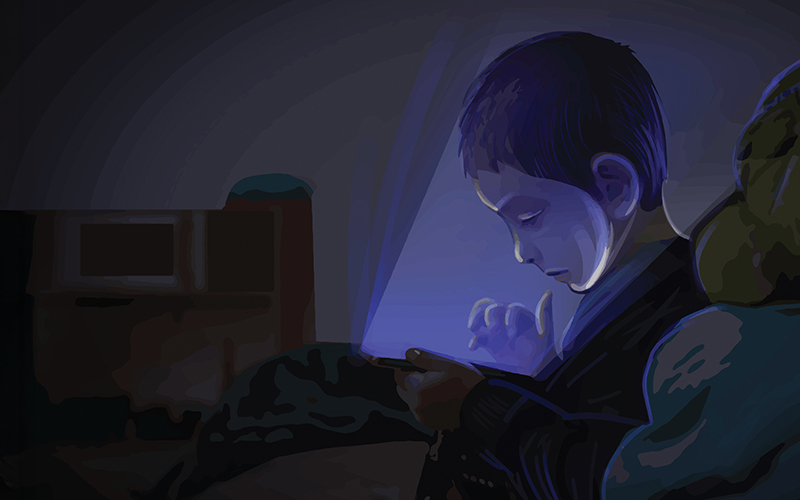
More and increasingly younger children are viewing pornography online, in a ‘world that is, in many ways, completely unfit for children’, writes Dame Rachel de Souza (Children’s Commissioner, 2025). The Children’s Commissioner for England describes her second report into the impact on children of viewing online pornography as a ‘map of what rock bottom looks like’ (Children’s Commissioner, 2025).
The ‘Sex is kind of broken now’: children and pornography report makes for shocking reading: 27% of the (1020) 16- to 21-year olds in England surveyed had seen online pornography by the age of 11, and some reported seeing it aged six or younger (Children’s Commissioner, 2025). They’re most likely to see it by accident – 59% (up from 38% in 2023) – and on social media or networking sites, rather than dedicated pornography sites. It’s also standard for the content to be violent. The majority of young respondents who had seen pornography online reported seeing depictions of illegal acts, which allows ‘attitudes that drive violence against women and girls to flourish’ (Children’s Commissioner, 2025). For further findings from ‘Sex is kind of broken now’, see page 11.
The problem isn’t confined to England. In July 2025, the chair of the Safeguarding Board for Northern Ireland told Parliament that children as young as nine were accessing pornography (Hughes, 2025). And following the introduction of the Online Safety Act (OSA) in the UK, in the same month, reports suggested that searches for virtual private networks (VPNs) surged by 341% in Wales, 286% in Scotland, 272% in Northern Ireland and 228% in England (Sinclair, 2025).
The OSA is designed to prevent under- 18s from accessing harmful content online, and mandates that platforms featuring adult content – including X and Reddit – check the age of users (as well as change algorithms to prevent access). VPNs, however, allow users to conceal their IP address and location, allowing them to bypass the act’s requirements. One VPN app maker said it saw an 1800% spike in downloads of VPNs (McMahon, 2025). The survey in Dame Rachel’s report was carried out just before the OSA came into effect, but, as she states, it’s clear the act ‘could not have come soon enough’ and, given how quickly technology moves, it needs to go further.
HOW DID WE GET HERE?
In 2021, a government report spoke of the growth of smartphone use and high-speed streaming occurring at the same time as the growth of content on pornography websites (Government Equalities Office & Women and Equalities Unit, 2021). Pornography on social media platforms in the UK has also increased significantly, primarily because of ‘harmful’ algorithms, whether intentional or not (Children’s Commissioner, 2023).
‘More children are being given phones, usually when they transition to secondary school,’ says Rebecca Jennings, author, teacher and trainer of relationships and sex education. In fact, nine in 10 children own a mobile phone by the time they reach the age of 11 (Ofcom, 2024). ‘Parents are sort of aware of how to manage the settings, but aren’t necessarily really managing it.’
Naturally, ‘young people Google things’,Rebecca continues. ‘They might have just learned about puberty at school and they type terms into Google, then [because of harmful algorithms] all sorts of things appear. [Or] they might have an older sibling who says “come and have a look at this”.
‘Also, when WhatsApp groups get set up among children – which could be a whole year group – all sorts of images appear. Still, some [secondary pupils] don’t realise that, if you’re under 18, it’s against the law to send a nude image.’
Even children without mobile phones may come across harmful content – perhaps unsurprisingly, when nearly all children (99%) now spend time online (Ofcom, 2024). ‘Gaming is sometimes overlooked,’ Rebecca says. In one case, an eight-year-old playing Roblox was messaged by someone who, a few weeks later, asked the child for intimate, sexual photos of himself (Hallett, 2024).
“SEX IS KIND OF BROKEN NOW”
70% of survey respondents have seen pornography online, up from 64% in 2023
73% of boys and 65% of girls report seeing online pornography
45% saw pornography on X (formerly Twitter), up from 41% in 2023
35% saw it on dedicated pornography sites, down from 37% in 2023
58% had seen porn depicting strangulation before they turned 18
44% reported seeing a depiction of rape (specifically, receiving sex while asleep)
Children’s Commissioner, 2025
WHAT ARE THE IMPACTS?
‘Violence, or graphic sexual content, is difficult for young minds to understand, and my work on the impact of pornography shows that seeing these things has an impact on their behaviour, and on their understanding of things such as consent,’ says Dame Rachel.
In her report, for instance, 44% of respondents agreed with the statement ‘girls may say no at first, but then can be persuaded to have sex’. Children who had seen pornography were more likely to agree with this statement than those who had not. Girls were also more likely to agree with this statement than boys were (Children’s Commissioner, 2025).
School nurses (SNs) are seeing evidence, too. ‘Our staff are reporting that they are seeing more cases involving children with behaviours linked to viewing pornography,’ says Rosie Franklin-Smith, operational manager for Public Health Nursing, Hertfordshire Community NHS Trust. ‘A change in mood, withdrawal, anxiety or sexualised behaviours can all be early indicators of unhealthy relationships or problematic porn use.’
Pornography also promotes unrealistic expectations. Rebecca describes teenage boys assuming that erections last for hours, girls assuming males take the lead in sexual relationships, and both boys and girls feeling body-image pressures. ‘There have been “designer vagina” conversations in schools, and children who haven’t believed me when I’ve said girls get underarm hair,’ she says. ‘If young people haven’t received sex education, their only basis is pornography. So they’re seeing a lot of force. They’re not seeing consent. Contraception is never shown. Violence is normalised.’
In Dame Rachel’s report, children were more likely to report seeing pornography depicting women, rather than men, receiving sexually violent acts (Children’s Commissioner, 2025). When questioned on the impact of exposure to pornography online, 82% of children and young people said it affected expectations around sex, and nearly three quarters said it affected their behaviour towards one another (Children’s Commissioner, 2025). Body image was alsoreported to be negatively impacted.
A larger proportion of children with special educational needs (76%) had seen pornography compared with those without SEN (69%)
THE WAY FORWARD
Among the recommendations Dame Rachel has made is amending the OSA to require VPN providers in the UK to put in place Highly Effective Age Assurance, to screen underage users and prevent them from accessing pornographic sites. She also called for the Crime and Policing Bill to prohibit the depiction of strangulation in online pornography (Children’s Commissioner, 2025). A spokesperson from the Department for Science, Innovation and Technology says: ‘Earlier [in 2025], the government announced that the depiction of strangulation in pornography will be made illegal [at the end of 2025], strengthening protections against violent and abusive content.’
On VPNs, the government message is promising but perhaps less definitive for now. ‘While there are no plans to ban VPNs, we are monitoring their use by young people closely and will not hesitate to take further action if they are being used to undermine child safety. Platforms promoting VPN use to UK children could face enforcement action and significant penalties.’
The government has also published statutory guidance on Relationships, Sex and Health Education (RSHE), which now includes information on strangulation, AI-generated images and sending nude pictures (Department for Education, 2025).Relationship and Sexuality Education (RSE) is mandatory for pupils in Northern Ireland, with schools developing their own policy in line with their ethos (BBC, 2025). RSE has also been mandatory in Wales since 2022 and the Scottish Government is in the process of finalising updated guidance on its relationships, sexual health and parenthood education (BBC, 2025).
Dame Rachel is calling on schools to implement the RSHE guidance and for the Department for Education (DfE) to lead a recruitment drive for specialist RHSE teachers. ‘Consistently, [children] tell me they want RHSE to prepare them for their future adult lives,’ Dame Rachel says. A DfE spokesperson says schools in England can start following the statutory guidance and many already have. The government has also announced that, from early 2026, schools will be able to apply for an RSHE training grant, ‘empowering the workforce to take on these challenges’.
The charity NSPCC is also calling on all governments in the UK to invest in teacher training and a comprehensive curriculum that ensures children understand what is appropriate and what isn’t. ‘Evidence shows that teaching about healthy relationships can reduce dating and relationship violence by an average of 17% [Youth Endowment Fund, 2022],’ highlights Georgina Rees, NSPCC policy and public affairs officer.
Georgina points to research that shows while many children and young people value teachers who are knowledgeable, confident, and equipped to deliver relationships and sex education in safe, inclusive and well informed environments, this isn’t always the case in all schools (NSPCC, 2023). ‘Some young people are telling us they are having to educate themselves about sex, and the information they’re provided with online is often untrue or misleading.’
‘Children are also sharing with us that education should cover topics children are curious about, exposed to or discussing online – in a way that is age-appropriate andsensitive,’ Georgina adds.
‘EVIDENCE SHOWS TEACHING ABOUT HEALTHY RELATIONSHIPS CAN REDUCE DATING AND RELATIONSHIP VIOLENCE BY AN AVERAGE OF 17%’
HOW YOU CAN HELP
SNs have a role to play in supporting the development of the RSHE curriculum, says Rhian Ogden, CPHVA Executive member and a lecturer in children’s nursing at the University of Leeds. ‘SNs should include discussion about healthy relationships and attitudes towards sex within their routine practice with young people.’
SNs (as well as schools and parents) should also offer transparency about discussing the graphic or violent pornography that children may have seen. ‘Children may have valid questions based on what they have viewed and SNs may be best placed to support them with these, as they may not want to ask in a classroom environment,’ Rhian adds.
While all school staff need to be alert to changes in a child’s behaviour, SNs can spot the warning signs earlier, such as the use of sexual language that feels more mature than a child’s age, imitating or displaying sexual behaviour they may have seen online, or a shift in how they approach friendships and relationships, Dame Rachel says. ‘SNs are a bridge between education and health services, providing reassuring advice and creating safe, confidential spaces at school where children can share their worries.’
Jessica Streeting, nurse consultant for public health at Central London Community Healthcare NHS Trust, agrees: ‘In their health assessments and chats with the SN, children and young people are encouraged to speak freely, and if they trust their SN, they may disclose habits and online activity.
‘The SN would then follow the same guidance and professional procedure as with any concerning behaviour. They will be non-judgemental and trauma-informed, and will always escalate concerning behaviour appropriately, via school and the safeguarding team. An integrated approach, involving communication with school, carers and the young person would be appropriate.’
Like many other NHS organisations, Hertfordshire Community NHS Trust, refers children demonstrating concerning behaviours to specialist services, as appropriate, such as those for young people or a Sexual Assault Referral Centre. ‘Promoting a whole-school or county approach to wellbeing and respectful relationships, and working in partnership, is key,’ says Rosie.
Of course, young people will only be served best when the SN service is at full capacity. ‘Numbers of SNs have dropped dramatically since 2009, but my recent School Census showed more than half of primary schools and nearly three quarters of secondary schools without a nurse want to have one for their children,’ says Dame Rachel.
WHAT NOW?
The tide may be changing. One news report shortly after the OSA came in said teenagers reported seeing less harmful content and ‘tamed’ algorithms (Carroll, 2025); and, in her lessons, Rebecca reports greater understanding between boys and girls about relationship power imbalances and misogyny. ‘You can see the penny drop right there,’ she adds.
The role of parents remains crucial and CPs can continue to help inform them. ‘Parents should try to have regular, open conversations with their children about what they do when online, what they might see that is confusing or distressing, and who they interact with,’ says Hayley Clark, NSPCC head of development and implementation. ‘Working with your children to set clear boundaries around what children can view, alongside supportive tools… can help them navigate the digital world more safely.’
With the right education, communication, partnership, resource, and internet restrictions – imposed and enforced by government – it can become possible for children and young people to be safe online. As Dame Rachel says of the OSA in her report: ‘My Office will be watching the implementation of these new protections closely.’
RESOURCES
- National Crime Agency – Supporting you to deliver education and protect children and young people from online sexual abuse
- Talking about pornography with kids
- Pornography: advice for parents
Image | ISTOCK
REFERENCES
BBC. (2025). What do children learn in sex education? See: bbc.co.uk/news/articles/c86gyv8yjz3o (accessed 3 December 2025).
Carroll M. (2025). ‘Tamed’ algorithms and plummeting pornography views: Impact of new online safety rules revealed one month on. See: news.sky.com/story/tamed-algorithms-and-plummeting-porn-views-impact-of-new-online-safety-rules-revealed-one-month-on-13416556 (accessed 3 December 2025).
Children’s Commissioner. (2025). “Sex is kind of broken now”: children and pornography. See: assets.childrenscommissioner.gov.uk/wpuploads/2025/08/cc-sex-is-kind-of-broken-now-children-and-pornography.pdf (accessed 3 December 2025).
Children’s Commissioner. (2023). ‘A lot of it is actually just abuse’ – Young people and pornography. See: childrenscommissioner.gov.uk/resource/a-lot-of-it-is-actually-just-abuse-young-people-and-pornography (accessed 3 December 2025).
Department for Education. (2025). Relationships Education, Relationships and Sex Education (RSE) and Health Education. See: assets.publishing.service.gov.uk/media/68b8499e11b4ded2da19fd92/Relationships_education__relationships_and_sex_education_and_health_education_-_statutory_guidance.pdf (accessed 3 December 2025).
Government Equalities Office & Women and Equalities Unit. (2021). The relationship between pornography use and harmful sexual attitudes and behaviours: literature review. See: gov.uk/government/publications/the-relationship-between-pornography-use-and-harmful-sexual-behaviours/the-relationship-between-pornography-use-and-harmful-sexual-attitudes-and-behaviours-literature-review (accessed 3 December 2025).
Hallett E. (2024) ‘I was asked for naked photos after making ‘friends’ on Roblox’. See: bbc.co.uk/news/uk-england-gloucestershire-68616730 (accessed 3 December 2025).
Hughes B. (2025) Children ‘accessing vile pornography’ on social media. See: bbc.co.uk/news/articles/cly8v125yvlo (accessed 3 December 2025).
McMahon L. (2025) VPNs top download charts as age verification law kicks in. See: bbc.co.uk/news/articles/cn72ydj70g5o (accessed 3 December 2025).
NSPCC. (2023). “We have to educate ourselves”: prioritising young people’s voices and their recommendations for change. See: learning.nspcc.org.uk/research-resources/2023/how-young-people-are-learning-about-relationships-sex-sexuality (accessed 3 December 2025).
Ofcom. (2024). How the Online Safety Act will help to protect children. See: ofcom.org.uk/online-safety/protecting-children/how-the-online-safety-act-will-help-to-protect-children (accessed 3 December 2025).
Ofcom. (2025). Quick guide to Protection of Children’s Codes. See: ofcom.org.uk/online-safety/illegal-and-harmful-content/quick-guide-to-childrens-safety-codes (accessed 3 December 2025).
Sinclair, T. (2025). Wales leads UK VPN surge as new porn laws spark digital backlash. See: pembrokeshire-herald.com/118049/wales-leads-uk-vpn-surge-as-new-porn-laws-spark-digital-backlash (accessed 3 December 2025).
Youth Endowment Fund. (2022). Relationship violence prevention lessons and activities. See: youthendowmentfund.org.uk/toolkit/dating-and-relationship-violence-prevention (accessed 3 December 2025).