

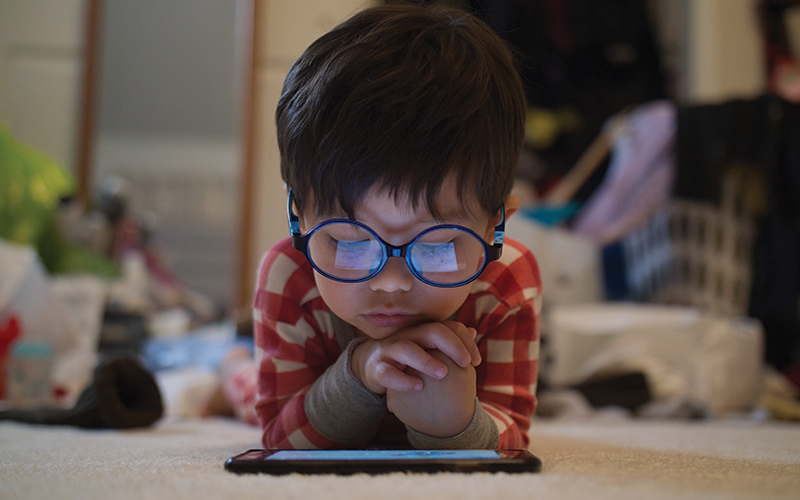
Children exposed to high levels of screen time before the age of two showed changes in brain development that were linked to slower decision making and increased anxiety by adolescence, researchers found.
The study is a first, say the authors, as it tracked the same children over more than a decade to map a possible biological pathway from infant screen exposure to adolescent mental health.
The researchers followed 168 children from an existing study cohort, with data on infant screen time (ages one-two), and conducted brain scans at three time points.
‘In children with high screen exposure, the networks controlling vision and cognition specialised faster, before they had developed the efficient connections needed for complex thinking,’ said Dr Huang Pei, the study’s first author.
Children with these ‘specialised’ brain networks took longer to make decisions during a cognitive task at age 8.5, while those with slower decision making reported higher anxiety symptoms at age 13.
‘This research gives us a biological explanation for why limiting screen time in the first two years is crucial,’ said senior author Assistant Professor Tan Ai Peng. He added that his team’s related research ‘highlights the importance of parental engagement, showing that parent-child activities, like reading together, can make a real difference’.
Study eBioMedicine
Image | ISTOCK